


By: Isatou Sarr
The World Health Organization (WHO) has commended The Gambia for significant progress in the fight against malaria, while warning that recent gains remain fragile and could be reversed without sustained efforts.
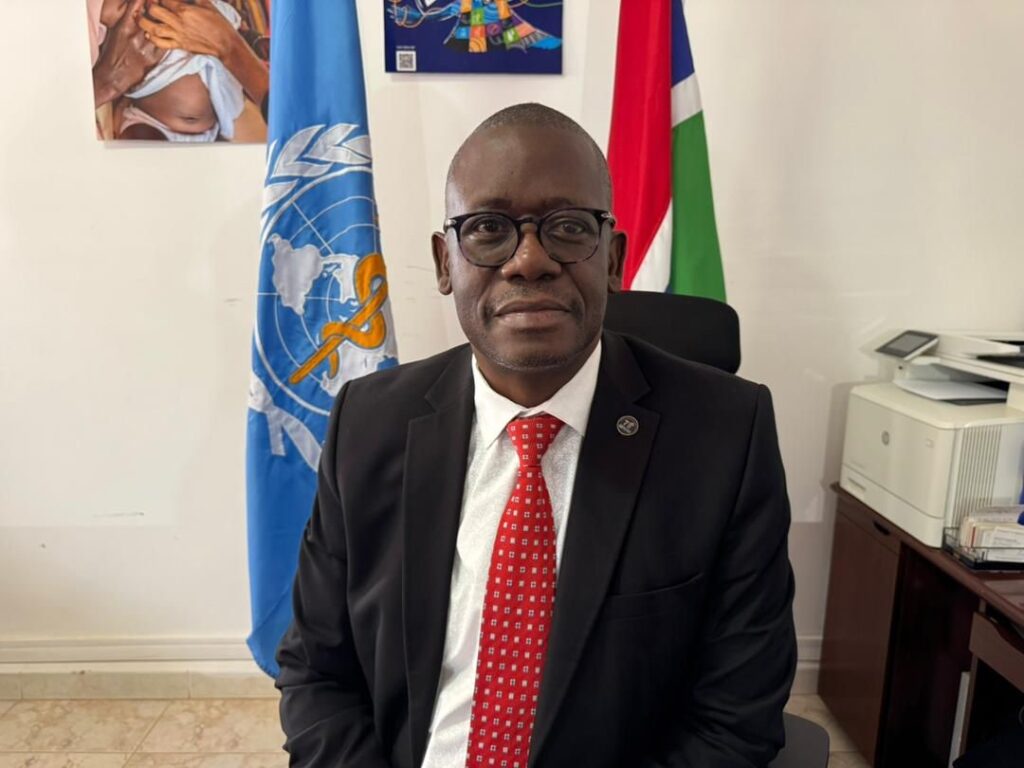
Speaking during the commemoration of World Malaria Day 2026 on 25 April, the WHO Representative in The Gambia, Dr Nathan Nsubuga Bakyaita, said global efforts to eliminate malaria were at a critical stage, supported by new tools and scientific advances.
He says malaria remains one of the world’s oldest and deadliest diseases, but noted that elimination is now achievable if countries maintain commitment, investment, and strong partnerships.
Dr Bakyaita highlighted the introduction of new malaria vaccines, improved insecticide-treated nets, and long-acting preventive medicines as key developments strengthening prevention and control efforts globally.
He added that for the first time, the goal of ending malaria was shifting from aspiration to reality.
In The Gambia, he said notable progress has been recorded, including a reduction in confirmed malaria cases from over 108,000 in 2024 to about 58,000 in 2025, representing a decline of nearly 46 per cent.
He also cited the distribution of 1.2 million next-generation mosquito nets, covering more than 80 per cent of households, and the protection of over 127,000 children under five through seasonal malaria chemoprevention. He further notes that malaria testing is now available in almost all public health facilities.
Despite these achievements, Dr Bakyaita warned that challenges persist, including climate change, insecticide resistance, and cross-border population movement, which continue to influence transmission patterns.
He said the WHO Global Technical Strategy for Malaria 2016–2030, along with initiatives such as Roll Back Malaria and the “Zero Malaria Starts with Me” campaign, continues to guide global and national responses.
Dr Bakyaita urged government, partners, and communities to sustain their commitment, stressing that malaria elimination cannot be achieved by health systems alone but requires collective community action.
He says maintaining momentum is essential to avoid reversing gains and to move closer to a malaria-free future.