


By: Fatou Krubally
Stakeholders in The Gambia’s fisheries sector have renewed calls for stronger community involvement in the management of fish landing sites, as concerns grow over declining fish stocks and increasing pressure on marine resources.
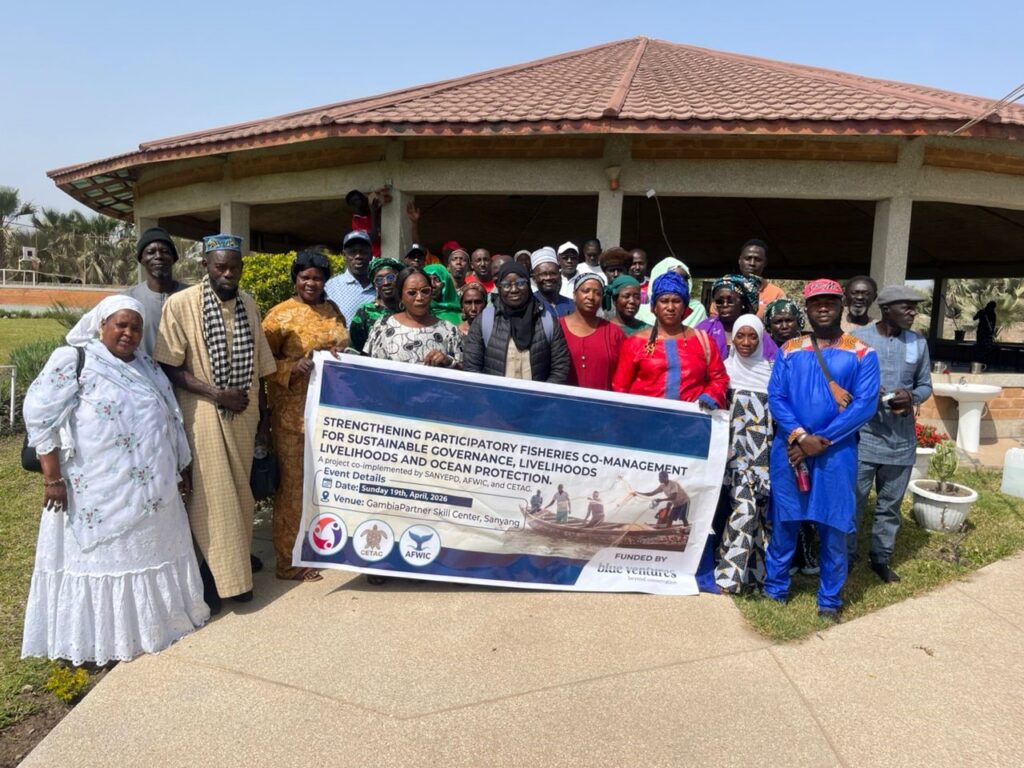
The call was made during a day-long capacity-building forum held in Sanyang, organised by the Sanyang Youths for Environmental Protection and Development (SANYEPD) with support from Blue Ventures. The gathering brought together fisheries stakeholders from coastal communities to discuss sustainable ocean governance and promote participatory co-management.
Participants emphasised the need for a more inclusive approach that allows fishing communities to actively engage in decision-making, monitoring and enforcement processes at landing sites. They argued that shared responsibility between government and local actors is key to ensuring sustainability in the sector.
The discussions come at a time when the fisheries industry contributing about 12 per cent to the national economy and serving as a major source of protein faces mounting challenges. Overfishing, climate change, habitat degradation and weak enforcement mechanisms continue to threaten the long-term viability of marine resources.
Co-management structures, including Community Fisheries Centres and Landing Site Management Committees, are already in place in areas such as Tanji, Brufut, Gunjur and Kartong.
However, stakeholders at the forum stressed the need to strengthen these systems to make them more effective and responsive to local realities.
Habibu Bojang, Executive Director of SANYEPD, described the forum as both timely and necessary, noting that coastal communities remain at the frontline of environmental threats, including coastal erosion, pollution and dwindling fish stocks. He said protecting marine ecosystems is directly tied to preserving livelihoods.
Abdoulie Ndiaye of Blue Ventures highlighted co-management as a practical solution to rebuilding fisheries, adding that the organisation continues to work closely with communities to promote sustainable practices and conservation efforts.
Representing the Ministry of Fisheries, Ebrima Jabang said co-management offers an opportunity for closer collaboration between authorities and communities, particularly in enforcing regulations and improving compliance.
Participants, including Awa Bayo, underscored the importance of strengthening participatory approaches to achieve sustainable governance, improve livelihoods and safeguard ocean resources.
Concerns were also raised over the impact of fishmeal factories, sand mining and continued overfishing along the coast.
Organisers said sustained dialogue and collaboration remained essential to developing lasting solutions and ensuring the protection of The Gambia’s marine resources for future generations.