


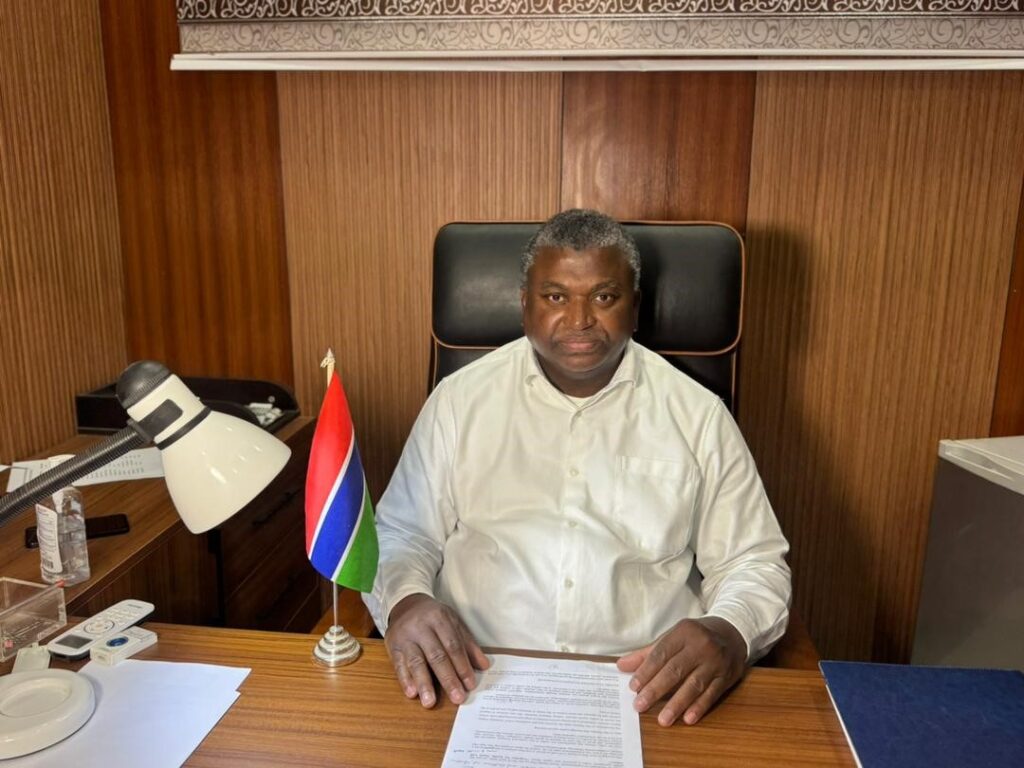
By Yunus S Saliu
The Gambia has recorded a 46 per cent decline in malaria cases between 2024 and 2025, according to the Ministry of Health.
The figures were announced in a national statement issued ahead of World Malaria Day, marked annually on 25 April.
Health Minister Dr Momodou Lamin Samateh said The Gambia joins the international community in commemorating the day to honour lives lost to malaria, highlight progress made, and reaffirm commitment to ending the disease.
This year’s observance is held under the theme: “Driven to End Malaria: Now We Can. Now We Must.”
Dr Samateh said despite global challenges such as drug and insecticide resistance, climate change, conflict and unstable funding, the country continues to record progress in malaria control.
He said confirmed cases declined from 108,090 in 2024 to 58,283 in 2025.
According to him, the improvement is linked to several interventions, including the distribution of 1.2 million next-generation insecticide-treated mosquito nets, reaching more than 80 per cent of households under a cross-border initiative with Senegal.
He added that 127,578 children under five received seasonal malaria chemoprevention during the rainy season, when transmission is highest.
Other measures include expanded rapid diagnostic testing, improved access to antimalarial medicines at community level, and intensified public awareness campaigns.
The minister said The Gambia has also strengthened partnerships with international organisations including the Global Fund, the United States Government, the China International Development Cooperation Agency, the International Federation of Red Cross and Red Crescent Societies, PATH International and Catholic Relief Services.
Dr Samateh reaffirmed government’s commitment to eliminating malaria by 2030 through enhanced surveillance, investment in innovation and universal access to prevention and treatment.
He also announced plans to introduce the malaria vaccine into the routine immunisation programme with support from Gavi, describing it as a key step in protecting children.
As part of this year’s activities, the Ministry of Health and partners will organise press briefings, radio and television discussions, and community outreach sessions to raise awareness on malaria prevention.
He urged citizens to sleep under treated mosquito nets, seek early diagnosis and treatment, and support health workers.
Meanwhile, WHO Representative in The Gambia, Dr Nathan Nsubuga Bakyaita, said World Malaria Day provides a global platform to align science, policy and community action against the disease.
He said malaria remains preventable and treatable but continues to affect millions, particularly in Africa.
Dr Bakyaita noted that new tools, including vaccines, improved mosquito nets and long-acting preventive medicines, are transforming malaria control.
He said these advances make malaria elimination within the current generation an achievable goal.
He welcomed The Gambia’s progress, citing expanded net distribution, improved child protection, and widespread availability of diagnostic testing in public health facilities.
However, he warned that climate change, insecticide resistance and cross-border movement of populations could undermine gains.
He called for sustained investment and strengthened cooperation among government, partners and communities.
“Zero Malaria starts with me. Zero Malaria starts with you. Zero Malaria starts with us,” he said.