


By: Fatou Krubally
Efforts to improve water supply in The Gambia’s Greater Banjul Area have reached advanced stages with a project expected to complete works on the issue next year.
According to the National Water and Electricity Company (NAWEC) works under its Water Supply Improvement Project (WASIP) are planned to be completed in 2027.
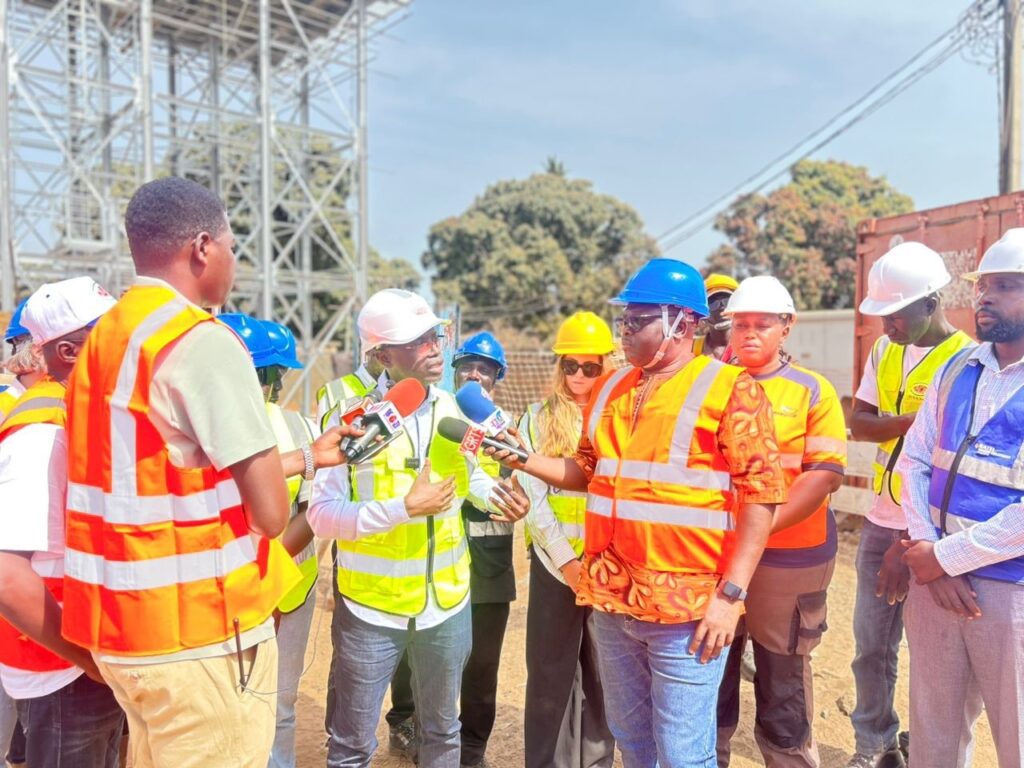
During a media tour of project sites in Serrekunda, Latrikunda German and Yundum, officials and partners say the project is aimed at strengthening water distribution and addressing persistent shortages in the urban area.
Omar Sanneh, Project Coordinator for WASIP and Head of NAWEC’s Water and Sewerage Business Unit, says Serrekunda remains a key hub in the distribution network.
He discloses that the existing elevated tank in Serrekunda has been dismantled and will be replaced, while a 1,000-cubic-metre ground reservoir is under construction to increase storage capacity.
Sanneh says Serrekunda supplies surrounding communities including Bundung and Latrikunda, as well as Banjul, which depends entirely on the facility.
He notes that the project also includes replacement of ageing transmission pumps and drilling of deep Maastrichtian aquifer boreholes, reaching depths of up to 600 metres, which are being introduced in the country for the first time.
According to him, the interventions are expected to improve efficiency, continuity and reliability of water supply in affected areas.
Lorane Rebut, Project officer of French Development Agency (AFD) in The Gambia, said the project has been supported since 2021 through grant financing from the Government of France.
She says the initiative seeks to improve water supply and sanitation services in a sustainable manner, in collaboration with NAWEC and other partners.
Rebut underscores that the AFD is ensuring compliance with international safety and sanitation standards, adding that the project will have long-term benefits for communities in the Greater Banjul Area.
Engineers and consultants say the works also include pipeline rehabilitation and system modernization to meet growing demand driven by population increase.
They disclose that the new reservoirs are designed with a lifespan of between 25 and 40 years.
Officials say the project, initially scheduled for completion in 2026, is now expected to be finalized in the first quarter of 2027.