


By Haddy Touray
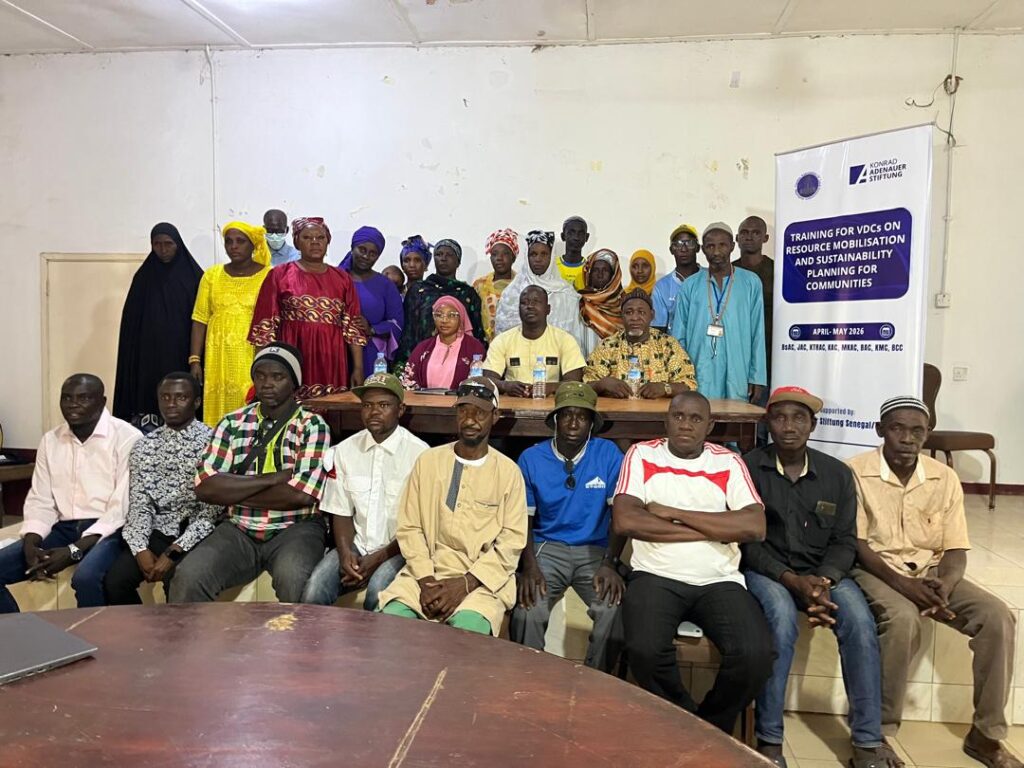
The Gambia Association of Local Government Authorities (GALGA), in partnership with Konrad Adenauer Stiftung (KAS) Senegal–The Gambia, on Monday launched a training programme for Village Development Committees (VDCs) focused on resource mobilisation and community sustainability planning.
The training, which commenced at the Basse Area Council, targets 160 participants drawn from four VDCs in each of the country’s eight Local Government Areas. It aims to strengthen local capacities in resource mobilisation and long-term planning to support community-led development.
VDCs play a key role in grassroots development as a link between communities and local authorities. However, many continue to face challenges in mobilising local resources and implementing sustainable development initiatives, often resulting in dependence on external support.
Speaking at the launch, GALGA Programme Manager Amadou Jallow said the initiative is intended to promote inclusive and sustainable development at the community level.
He said the training would enhance community engagement, improve service delivery, and strengthen local governance structures. He added that participants would be assessed through pre- and post-training surveys, as well as interactive feedback sessions to measure knowledge gained and the relevance of the programme.
For his part, Konrad Adenauer Stiftung Senegal–The Gambia Programme Manager Lucien Nadieline said the organisation is dedicated to promoting democracy and development through political education.
He said KAS operates in more than 120 countries and has been active in Senegal since 1976, noting that the foundation will mark its 50th anniversary this year.
Nadieline added that the partnership with GALGA, established in 2021, has led to several capacity-building initiatives and town hall meetings aimed at strengthening local governance.
Lead trainer and Principal of the Rural Development Institute, Bakary Fofana, said the training is critical for empowering VDCs to mobilise resources for community development.
“Many communities have significant resources but lack the means to utilise them. This training will enable communities to sustain local initiatives, reduce dependence on external funding, and strengthen ownership of development projects,” he said.