


By Yunus S. Saliu
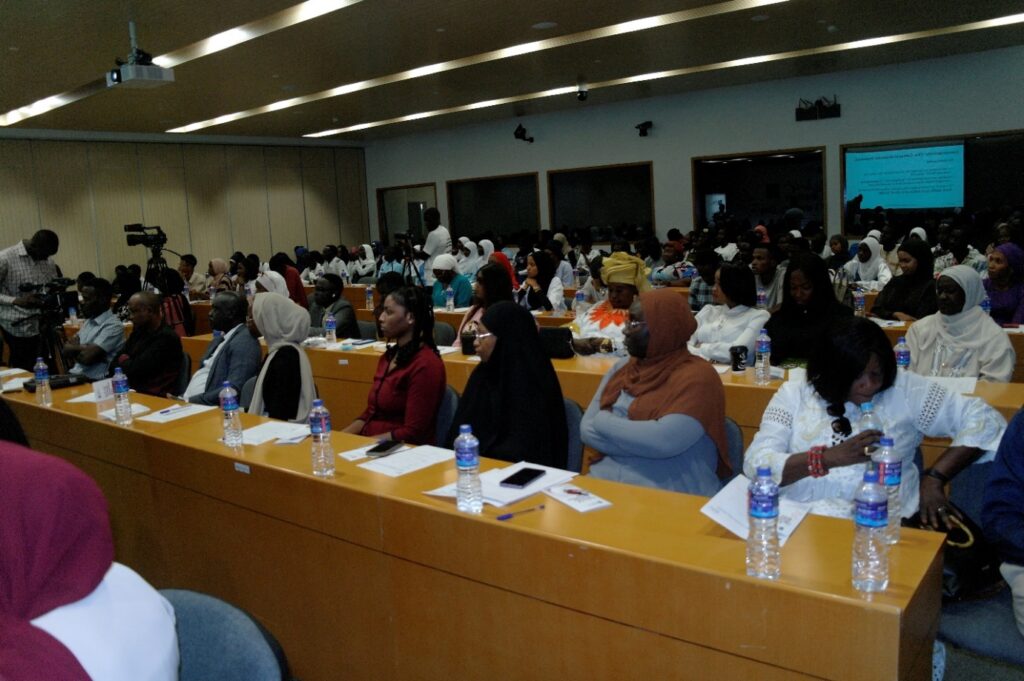
The Human Genetics Awareness Association (HuGAA) on Monday convened stakeholders at the Sir Dawda Kairaba Jawara International Conference Centre to mark the inaugural World Human Genetics Day (WHGD) in The Gambia, aimed at promoting awareness and understanding of human genetics.
Speaking at the opening ceremony, the Minister of Health, Dr. Momodou Lamin Samateh, described the event as a landmark initiative, noting that it marked the first global observance of World Human Genetics Day.
“For the first time anywhere in the world, we are inaugurating World Human Genetics Day, a day that asks humanity to pause and reflect on something that unites every single one of us: the code written inside our very cells that makes us who we are,” he said.
The minister commended HuGAA, under the leadership of its founder and chairperson, Sainabou Laye Ndure, for what he called its vision and commitment in advancing genetics awareness in the country and beyond.
“The establishment of this day is not only timely but also forward-looking and reflects a deep commitment to advancing both science and public health in our country and across the African continent,” he added.
Dr. Samateh explained that human genetics is the study of how traits, conditions and diseases are passed down through families, noting that genes serve as instructions guiding growth, body functions and responses to environmental factors.
He, however, emphasised that genetic knowledge does not determine an individual’s future, but rather serves as a tool for improved healthcare, early diagnosis and targeted treatment.
Highlighting the relevance of genetics in public health, the minister cited sickle cell disease as one of the most common inherited blood disorders in sub-Saharan Africa, including The Gambia. He said the condition, caused by a mutation in a single gene, can lead to pain, anaemia and organ damage, but noted that increased awareness enables families to make informed health decisions.
He further stressed that scientific knowledge must reach communities to have an impact.
“Science that stays in the laboratory does not save lives. It saves lives when it reaches people, when it is understood, trusted and acted upon,” he said, underscoring the importance of HuGAA’s public engagement efforts.
HuGAA is a public advocacy organisation dedicated to improving genetics literacy and bridging the gap between scientific research and communities across The Gambia and Africa.