


By Yunus S. Saliu
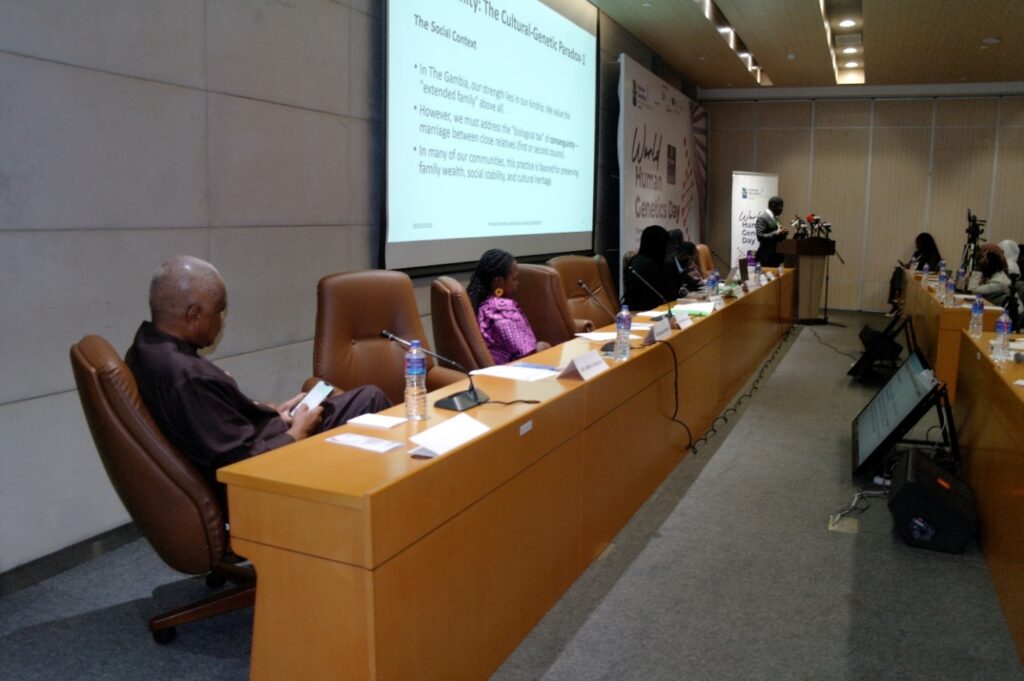
The Gambia on Monday marked the inaugural World Human Genetics Day (WHGD) with a high-level gathering of scientists, clinicians, policymakers, students and community members at the Sir Dawda Kairaba Jawara International Conference Centre in Bijilo.
The event, organised by the Human Genetics Awareness Association (HuGAA), was spearheaded by its founder and chairperson, Sainabou Laye Ndure, who described the occasion as the beginning of a global movement to raise awareness about genetics and reduce stigma associated with genetic conditions.
“Today is not just an event; it is the beginning of something we hope will outlive all of us,” Ndure said, adding that the initiative seeks to set a global precedent.
The gathering brought together a broad range of stakeholders, including government officials, healthcare professionals, researchers and members of the public, to discuss the role of genetics in health and disease.
In her keynote address, Ndure recalled a childhood experience that inspired her interest in genetics, citing a case in her community where a child’s medical condition was misunderstood and attributed to spiritual causes. She later identified the condition as likely spinal muscular atrophy, a genetic disorder affecting motor nerves.
She stressed that lack of understanding of genetics often leads to fear, stigma and misplaced blame, resulting in avoidable suffering.
Ndure explained that genetics is a natural component of human biology, noting that DNA carries instructions that influence various aspects of health, including susceptibility to diseases.
She highlighted common genetic and hereditary conditions in The Gambia and West Africa, including sickle cell disease, G6PD deficiency, type 2 diabetes, hypertension and chronic kidney disease, underscoring the need for improved research, diagnosis and public education.
“Genetics is not a curse; it is knowledge,” she said.
Ndure called for the integration of affordable genetic testing into the country’s healthcare system and advocated for the development of national and regional genomic databases to enhance research and enable more effective, locally relevant medical care.
She noted that people of African ancestry account for less than three percent of participants in global genetic studies, despite the continent’s high genetic diversity.
“This is not just a scientific gap; it is a justice gap,” she said.
According to Ndure, HuGAA aims to bridge the gap between scientific research and communities through education, advocacy, genetic counselling and policy engagement, while fostering partnerships with government institutions, international organisations and private sector actors.
She expressed hope that March 30 would gain global recognition as World Human Genetics Day in the future.
The event concluded with calls for strengthened collaboration among scientists, policymakers and healthcare providers to ensure that advances in genetics benefit communities in The Gambia and across Africa.