


By Haddy Touray
The Kanifing Municipal Council (KMC) plans to strengthen waste management with the installation of a tire recycling plant, a move officials say will reduce environmental hazards and create employment opportunities.
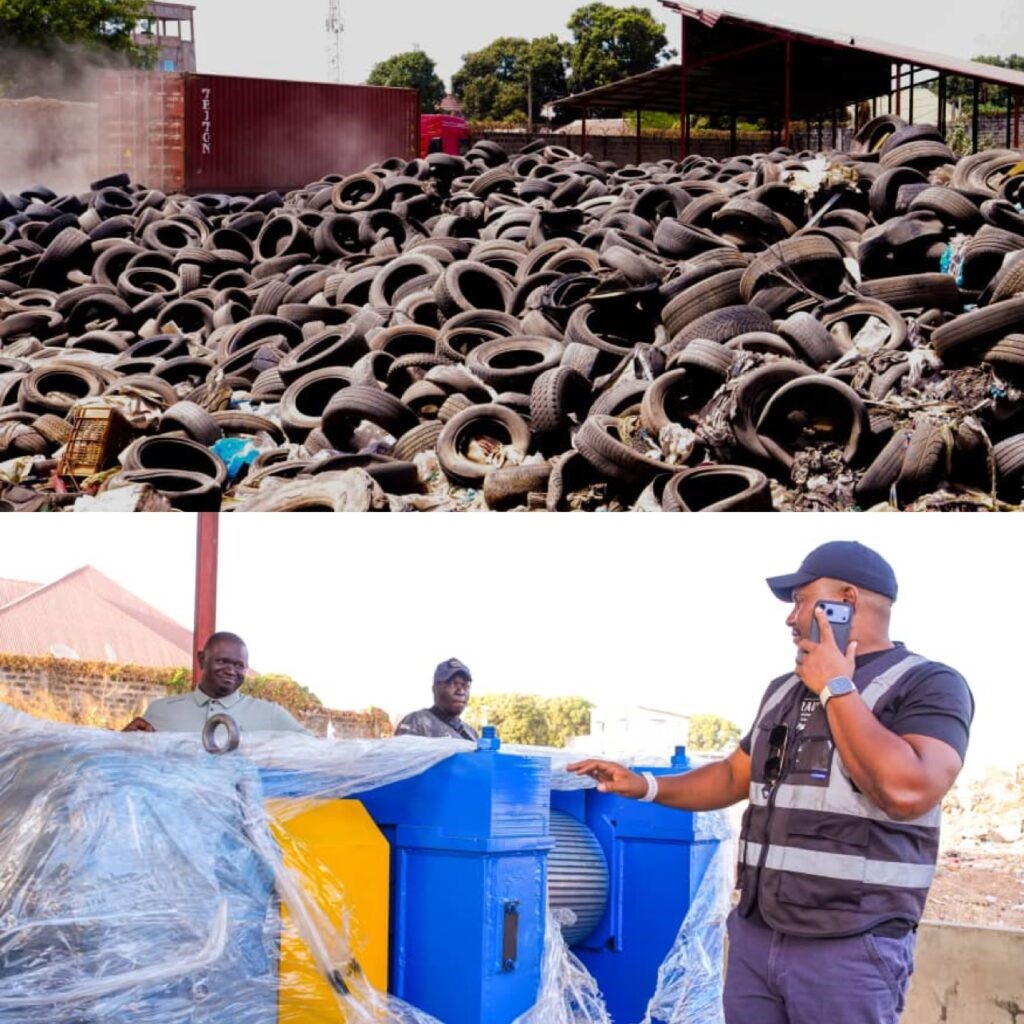
The facility, developed in partnership with the United Nations Development Programme (UNDP), is expected to process thousands of used tires currently scattered in dumps, waterways, and open spaces across the municipality.
Speaking in a telephone interview on Wednesday, KMC Mayor Talib Ahmed Bensouda described discarded tires as a “persistent environmental hazard.”
“Tires are a huge menace in our society. They contribute greatly to environmental degradation and littering, and they are an eyesore. Tires do not decompose; they can take up to 100,000 years to break down,” he said.
The recycling plant will recover materials such as rubber and metal wires, potentially creating new employment opportunities while reducing pollution, the mayor added.
Details on the plant’s processing capacity and overall cost will be revealed at its official launch, when engineers and UNDP representatives will present technical specifications.
“I would advise that we wait until the launch, when the technicians and the UNDP team are present, because I would not want to be wrong on the figures,” Mr. Bensouda said.
According to the mayor, the recycling process involves industrial shredding to break down tires into reusable components. More technical information, including daily processing capacity and employment numbers, will be shared at the launch event.
Municipal officials say the project could have broad economic and environmental benefits. Removing tires from drains and dumping grounds may reduce flooding and improve sanitation, while recycled materials could serve other industries.
“We expect to see social and economic impact through the circular economy. It will create jobs, and it will also have an environmental impact by freeing our waterways from used tires. It’s a win-win situation,” Mr. Bensouda said.
Originally planned for Abuko, the plant’s location was moved to the Bakoteh dump site due to construction costs. The site already hosts a German-funded recycling facility that had remained underused because of a lack of machinery.
“Most of the tires actually end up at the dump site,” the mayor said, calling the relocation a practical solution that leverages existing waste infrastructure.
Mr. Bensouda noted that the initiative is part of broader municipal efforts to improve environmental management, including a recently installed composting facility under a “Zero Waste” programme.
“KMC is very committed to improving the environment and ensuring that we bring solutions,” he said, emphasizing that the project aims to create employment, particularly for youth and women.
He added, however, that infrastructure alone would not solve the waste problem.
“We can keep providing facilities, but we also need attitudinal change. When facilities are available, people should take waste there rather than dumping it indiscriminately, because it becomes very expensive to collect,” Mr. Bensouda said.