


By Yunus S Saliu
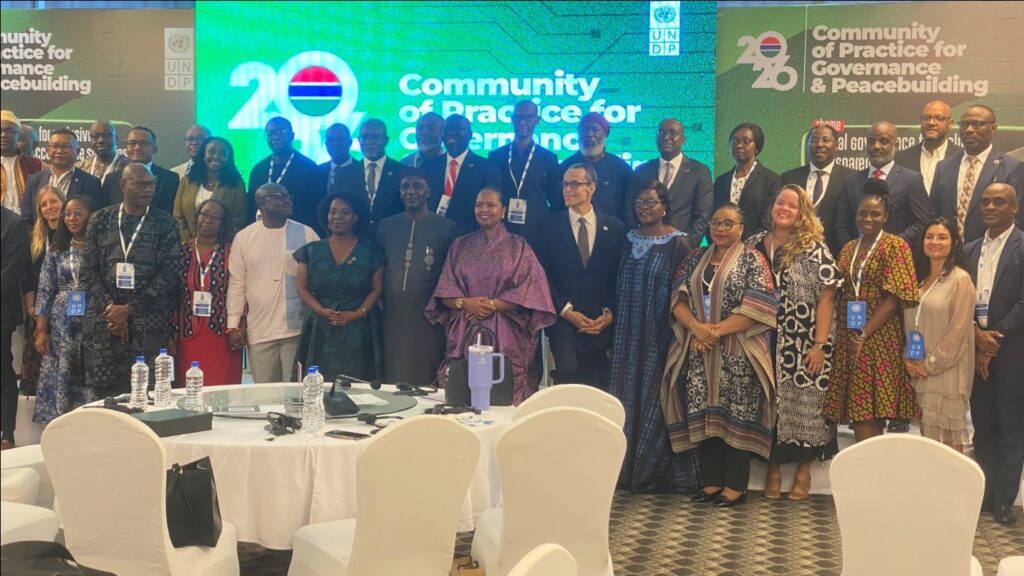
The United Nations Development Programme (UNDP) has launched the 2026 Africa Governance and Peace-building Community of Practice (CoP) forum in Banjul, which runs from March 10 to 12.
The event is being held at the Sir Dawda Kairaba Jawara International Conference Centre in Bijilo under the theme “Digital Governance for Inclusive, Transparent, and Accountable Societies.” The forum brings together experts from across Africa to examine how digital transformation can reshape governance, improve public service delivery, and strengthen democratic processes.
This year’s CoP aims to produce actionable recommendations, document emerging digital governance practices, and foster regional cooperation to support democratic resilience and sustainable development, in line with the African Union’s Agenda 2063, the UN Sustainable Development Goals, and the UNDP Strategic Plan 2026–2029.
Some 60 to 70 participants, including representatives from UNDP’s governance, peace-building, rule of law, elections, and human rights portfolios across Africa, are attending. Discussions focus on leveraging Africa’s rapid digital transformation while addressing challenges such as digital exclusion, misinformation, cybersecurity threats, and the protection of digital rights.
Mandisa Mashologu, UNDP Resident Representative in The Gambia, said the theme addresses a critical area of governance transformation. She noted that digital technologies expand access to services, improve transparency, and create opportunities for citizen participation, while warning that digital divides, misinformation, and human rights vulnerabilities require a coordinated response.
Mashologu also praised The Gambia’s commitment to digital governance as part of its democratic renewal, positioning the country as a regional leader. She referred to the recent Sahel Governance Forum, which reinforced The Gambia’s role in hosting regional dialogues in partnership with the Economic Community of West African States (ECOWAS), the African Union, and the United Nations.
Abiola Idowu-Ojo, Executive Secretary of the African Commission on Human and Peoples’ Rights, emphasized the need for African countries to collaborate in harnessing digital innovation for improved governance while safeguarding human rights, particularly in the context of artificial intelligence.
Baboucarr Bouy, Minister of Public Service in The Gambia, said hosting the forum highlights the country’s growing leadership in regional governance discussions. He added that the dialogue could have far-reaching implications for shaping governance across the continent.
Karl Frederick Paul, United Nations Resident Coordinator in The Gambia, described the forum as timely amid significant political, demographic, and technological changes in West and Central Africa. He stressed the international community’s role in guiding these transitions to promote stability, protect rights, and increase inclusion, especially for Africa’s youth.
As the forum continues, participants are engaging in discussions aimed at harnessing digital transformation to strengthen governance, improve service delivery, and enhance civic participation while addressing the challenges of the rapidly evolving digital era.