


By: Binta Jaiteh &Abdoulie Daffeh
Nigerian presidential aspirant and former Anambra State governor, Peter G. Obi, has urged African countries to embrace leaders who are committed, competent, and dedicated, warning that the continent cannot progress under officials who make excuses and fail to deliver.
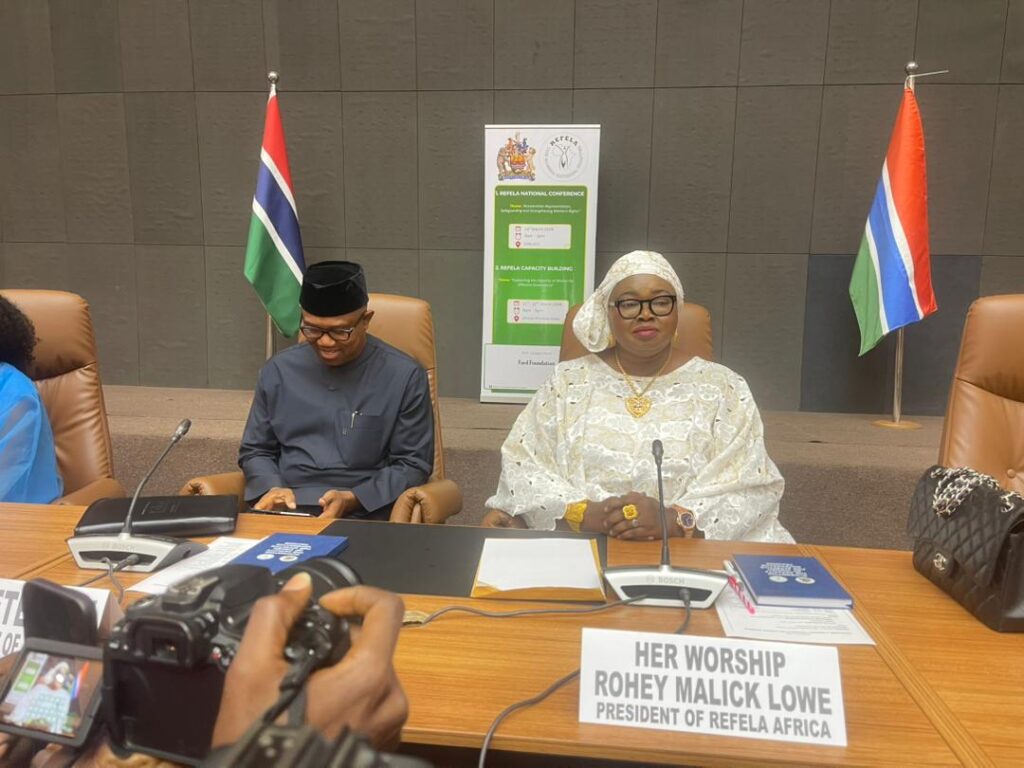
Obi made the remarks on Tuesday at the opening of the RAFEELA Gambia Chapter 4th National Women’s Conference at the Sir Dawda Kairaba Jawara International Conference Center. The conference, themed “Accelerating Representation, Safeguarding and Strengthening Women’s Rights”, seeks to empower women and enhance their participation in development. The programme is supported by the Ford Foundation as part of its initiative to promote gender equality and inclusive governance in Africa. REFELA Gambia is a network of locally elected women working to advance gender equality, strengthen democracy, and protect human rights.
Addressing participants, Obi described women as key partners in development and called for greater representation as a fundamental human right.
“The reason Africa cannot develop is that we neglect our key economic drivers, who happen to be women. Women’s representation should not be optional because they are central to economic growth. Africa has vast uncultivated land and 60 percent productive youth, yet poverty remains high. This is largely due to poor governance. If we do not reform governance systems, the continent will struggle to progress,” Obi said.
He thanked the Banjul City Council for hosting the event and emphasized inclusivity and collective responsibility for Africa’s rapid development.
Speaking at the conference, Banjul Mayor Rohey Marlick Lowe highlighted the challenges women face in politics, education, health, and access to resources. She acknowledged government efforts but called for stronger enforcement and sustainable initiatives.
“REFELA’s strength lies in unity, and your presence today proves that the fight for women’s rights transcends borders and welcomes allies from all nations and genders,” Lowe said.
Former Vice President Fatoumatta Jallow Tambajang noted that women’s inclusion in decision-making remains limited despite legislative efforts.
“We fought for equal representation from 2015 to now. We have a bill proposing a constitutional amendment to ensure 40 percent women in decision-making, but implementation remains a challenge,” Tambajang said.
She urged President Adama Barrow to adopt and implement reforms, stressing that leadership requires ethics and accountability.
Human rights activist Fatou Sanneh highlighted gaps between law and enforcement, stressing that many women remain unaware of their rights.
“We have the Women’s Act, ratified the Maputo Protocol, and uphold the ban on FGM. But if a woman in a West Coast village does not know she can report violations, does the law truly exist for her?” Sanneh asked.
Sanneh called for increased women’s representation in parliament and local councils, stressing that economic independence is critical to safeguarding women’s rights.
“Representation is not just a number. Women should be advocates and managers of resources, not just beneficiaries of aid,” she said.