


By: Fatou Krubally
Former National Assembly member and veteran broadcaster Ndey Yassin Secka has urged the government to do more and take concrete steps towards improving the living conditions of persons with disabilities.
She says the government should move beyond legislation and help persons with disabilities, particularly the visually impaired.
In an interview with The Voice newspaper, Secka, the country’s first visually impaired woman to serve in the National Assembly, said that although the Disability Act was a significant milestone, its impact remains limited due to weak implementation and lack of representation.
“What is the use of assenting to the Disability Act if nothing is done?” she asked, noting that there is currently no representative of persons with disabilities in the National Assembly. “That absence has made disability issues dormant.”
Secka says persons with disabilities are often treated as objects of charity rather than as citizens with rights and capabilities, stressing that disability should not be equated with inability.
She recalled that for decades there was little or no budgetary allocation for disability-related programmes, forcing many families with disabled children to resort to street begging.
“We are not beggars,” she said. “If persons with disabilities are included and given the right tools, they can contribute meaningfully to national development.”
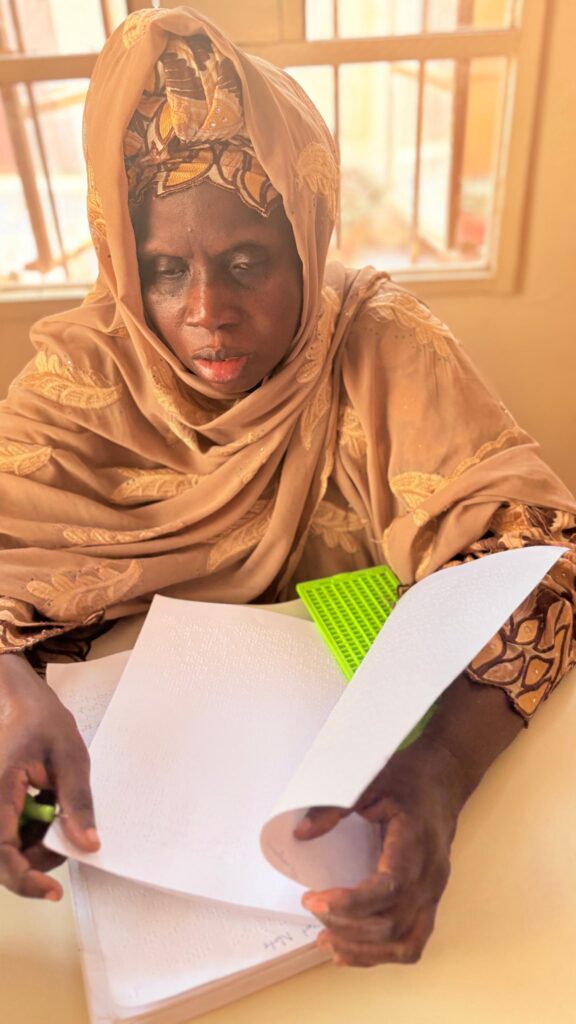
Drawing from her experience as a visually impaired student, broadcaster at Gambia Radio and Television Services (GRTS) and later a nominated member of parliament, Secka highlighted the persistent lack of accessible learning materials, particularly Braille resources, in public institutions.
She called on the government to invest in modern Braille technology, noting that the production of Braille materials is no longer costly.
“Today, you can print Braille directly from a computer. Whether or not you know Braille, information can be made accessible,” she said.
Secka also criticized the exclusion of persons with disabilities from decision-making bodies, including advisory boards established to address disability concerns.
“Nothing for us without us,” she said, warning that policies designed without the involvement of persons with disabilities often fail at the implementation stage.
While commending President Adama Barrow for assenting to the Disability Act, Secka urged the government to consolidate that effort by prioritizing inclusion in education, employment and governance.
“Disability is a cross-cutting issue,” she said. “You either address it fully, or you forget about it altogether.”