


By Binta Jaiteh
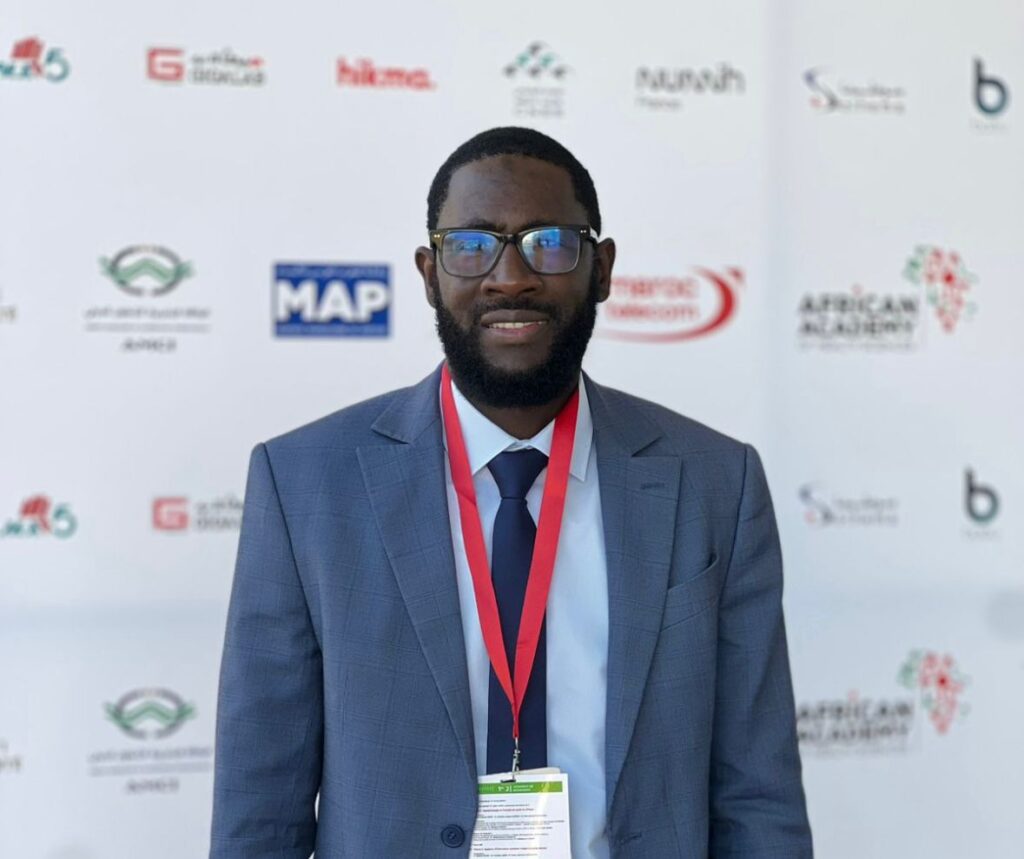
Banjul, The Gambia – Saikou Marong, First Secretary at the Gambian Embassy in Morocco, has stated that no opposition party is likely to challenge President Adama Barrow in the 2026 elections.
In an interview with The Voice newspaper, Marong said opposition parties have failed to present a credible alternative to Gambians. “They have not articulated clear, realistic, and people-centered policies that can inspire trust and confidence among voters,” he said.
He added that until the opposition offers concrete policies, a coherent national vision, and a practical roadmap for governance, it will remain difficult for them to gain voter trust and emerge as a serious contender in the 2026 polls.
Marong noted that President Barrow and the ruling National People’s Party (NPP) have already begun implementing policies across key sectors, including infrastructure, education, health, youth empowerment, and economic growth. He said these efforts provide Gambians with a tangible basis to assess government performance.
“Democracy and political freedom are other reasons citizens support President Barrow. Under his leadership, The Gambia has continued to enjoy freedom of expression, political tolerance, respect for human rights, and regular elections, marking a clear departure from authoritarian rule,” Marong said.
He highlighted infrastructural achievements, including road construction, expanded electricity access, clean drinking water, schools, and health facilities. On economic challenges, Marong said, The Gambia is not alone in facing hardships. “The global economy is under strain, and even countries with greater resources are struggling. The Gambia should not be treated as an exception,” he said.
On healthcare, Marong said the government has built new hospitals and is investing in training Gambian doctors as specialists to reduce reliance on foreign medical treatment.
Marong, a former lawmaker for Latrikunda Sabiji under the United Democratic Party (UDP), emphasized that Gambians living abroad are sometimes misled by inaccurate narratives. “The Gambian Embassy maintains an open-door policy and is fully accessible to all Gambians. This reflects a people-centered approach to diplomacy,” he said.
Referring to recent by-elections, Marong said the UDP endorsed a GDC candidate in Niamina West while fielding its own candidate in Kerr Jarga. He noted that despite opposition projections on social media, the NPP emerged victorious.
Marong defended his departure from the UDP, arguing the party had altered the terms of the 2016 coalition. “The coalition was built on a three-year agreement, not five. The UDP later informed Gambians that President Barrow would serve five years, sidelining coalition partners,” he said.
He said their disagreement with the UDP was about political ambition rather than policy. “The UDP sought to replace President Barrow with Ousainou Darboe in the 2021 elections. We chose continuity and stability. Standing by this conviction is not betrayal but responsibility,” Marong said.
He concluded: “The real betrayal occurred when rules were changed, and party ambition was placed above the collective interest of Gambians.”