


By Haruna Kuyateh
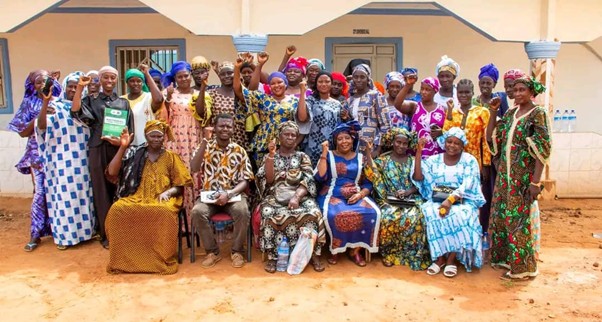
Some 30 women leaders are currently taking part in a three-day training programme on land governance and management, as outlined in the new National Land Policy (2026–2035).
The training is organised by ActionAid International, The Gambia (AAITG) in partnership with the Participatory and Productive Resilience Strengthening (P2P2RS) Project under the Ministry of Agriculture, Food Security, and Livestock.
The three-day training, held at Mansa Wally Lodge in Mansakonko, Lower River Region, aims to enhance participants’ understanding of land governance, administration, and women’s rights to land ownership. The initiative also seeks to popularize the new land policy, which promotes equitable access, documentation, and use of land resources.
Dr. Demba Sowe, Head of Development Planning at the Ministry of Lands, Regional Integration, and Religious Affairs, underscored the significance of the training in strengthening land governance structures and increasing awareness of the new policy.
He said the policy aligns with the government’s Recovery-Focused National Development Plan (2023–2027) and serves as a framework for effective land management, cooperation, and resource mobilization with both domestic and international partners.
Dr. Sowe described the policy as a milestone in addressing critical land tenure issues and reforming existing systems to ensure inclusivity.
“The policy aims to foster a pro-development land use culture and enhance the capacity of institutions to mobilize the necessary resources for its successful implementation,” he stated.
He noted that despite challenges in the land sector, including disputes over access and tenure rights, the government has made progress in improving land administration and legal frameworks. The policy, he adds, defines the roles and responsibilities of government institutions, traditional authorities, and non-state actors in land management through a participatory and inclusive process.
Discussions during the training focused on land tenure systems, particularly customary, freehold, and leasehold, and encouraged participants to follow due process in acquiring Certificates of Customary Ownership (CCOs).
Dr. Sowe also disclosed that the Ministry of Lands plans to establish a special high court to handle land disputes, with the aim of promoting effective governance and accountability in the sector.
Mansata Fatty of Niamina East District Tribunal and Darboeding Darboe of Sankandi, Kiang West, commended AAITG and the P2P2RS Project for building women’s capacity and raising awareness of the new land policy.
Madam Fatty said her tribunal has registered and resolved 30% of land conflict cases in the district, while Madam Darboe emphasized that the training would help bridge information gaps and empower women leaders to promote fair land governance.
“This training will build confidence among women and enable them to seek justice and inclusion in land administration,” Madam Darboe said.