


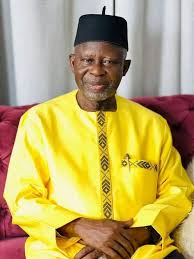
By: Binta Jaiteh
Main opposition United Democratic Party leader, Lawyer Ousainou Darboe will face widespread resistance to another presidential run, a survey results revealed.
The survey conducted by the Center for Policy, Research and Strategic Studies (CEPRSS) Gambia has shown that many voters did not favour Darboe. “The opinion poll results indicate that Ousainou Darboe faces a significant challenge in attracting voter support for the 2026 Presidential Election. Nationally, only 18% of respondents expressed willingness to vote for him if he runs, while a decisive 63% said they would not, and another 18% remained undecided,” the survey disclosed.
Meanwhile, the majority of respondents in the poll expressed the view that Ousainou Darboe should not contest in the 2026 Presidential Election. Nationally, 58% of respondents said “No” to his potential candidacy, compared to 28% who said “Yes” and 13% who were unsure.
“These findings suggest that while Darboe retains notable pockets of strong support particularly in Basse and Mansakonko, his potential candidacy faces substantial opposition in key urban centres like Kanifing, as well as significant uncertainty in several regions. This mixed regional pattern could have implications for both his decision to run and his broader electoral strategy:
The survey pointed out that the age-based analysis of whether Ousainou Darboe should contest the 2026 presidential elections shows that opposition is strongest among younger and middle-aged groups. Among voters aged 25–34, as many as 20% say he should not contest, the highest level of rejection across age groups.
“Support for Darboe is generally weak across all age groups, never rising above single digits. The 35–44 age group offers him slightly more encouragement, with 9% support, while the 55+ group shows only 5% support. Meanwhile, undecided levels remain modest (between 2– 5%) in all categories.“
According to CEPRSS understanding public opinion is essential to ensuring that electoral debates and political strategies are grounded in the priorities and expectations of citizens. It says Opinion polls play a vital role in modern democracies by providing evidence-based insights into voter sentiment, candidate favorability, and perceptions of governance.