


By: Fatou Krubally
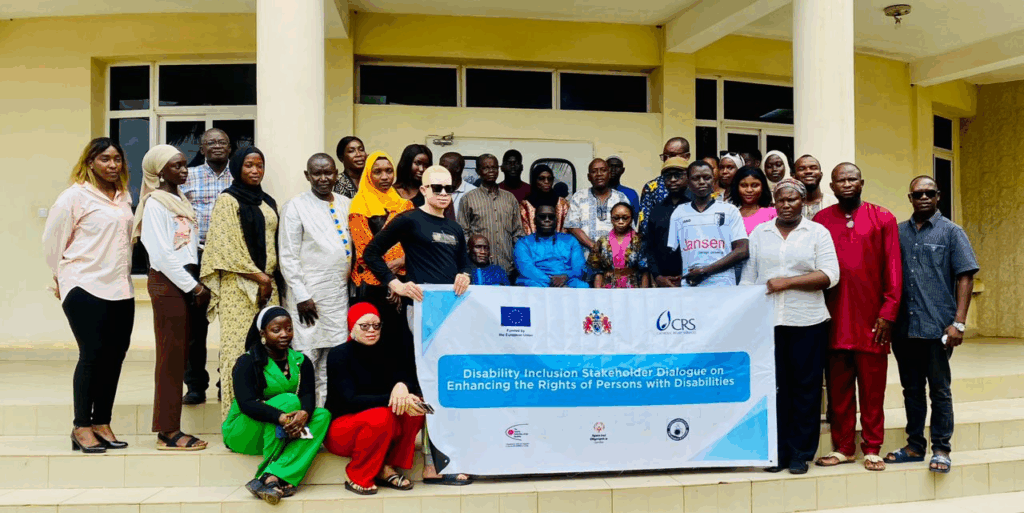
The Catholic Relief Services (CRS), in partnership with the European Union and national disability organisations, Thursday convened a quarterly stakeholders’ workshop.
This is geared towards reviewing progress in the implementation of the Disability Inclusive Pathways Project, a 30-month initiative designed to empower children with disabilities through education, technology, and play.
Held at the Nana Conference Hall, the meeting brought together representatives from the Gambia Federation of the Disabled (GFD), the National Organisation for Disabled and Orphans (NODO), Special Olympics Gambia, government institutions, civil society groups, and development partners.
In his welcoming address, CRS Program Manager Saidina Alieu Jarjou said the project, funded by the EU, was working to break barriers that prevent children with disabilities both girls and boys from accessing education and recreational opportunities. He highlighted recent activities including an inception workshop, disability awareness training for school administrators, live radio shows, and an on-going baseline assessment on inclusion.
NODO chairman Lamin Manneh described the project as “a pathway for equal opportunity,” stressing that an enabling environment is critical for children with disabilities to realise their potential. Drawing from his personal story as a polio survivor, he said access to education and empowerment had allowed him to contribute at the highest level of public service, urging stakeholders to ensure that no child is left behind.
For his part, Special Olympics Gambia Director Omar Touray underscored the importance of inclusion as a daily practice. “We might be able today, but we don’t know what tomorrow holds,” he said, reminding participants that inclusive schools and communities benefit everyone.
Speaking on behalf of the EU Delegation, project manager Isatou Touray reaffirmed the Union’s commitment to supporting initiatives that advance dignity, equality, and solidarity. She noted that the project is not only about removing barriers but also about “creating pathways” to education, legal protection, and community acceptance.
The day-long meeting featured discussions on autism, consumer protection issues affecting persons with disabilities, and the challenges facing institutions in advancing disability rights. Participants also outlined next steps to ensure sustained collaboration.
The Disability Inclusive Pathways Project represents a significant push to mainstream disability issues into Gambia’s education system and wider society. As stakeholders concluded, lasting impact will depend on collective effort from government, civil society, families, and communities.