


By: Fatou Krubally
The Government of The Gambia has launched a landmark initiative aimed at strengthening the climate resilience of the Greater Banjul Area.
The Climate-Resilient Banjul: Enhancing Urban Resilience (CLIMB) Project, funded with $12.7 million from the Global Environment Facility (GEF), seeks to protect vulnerable communities and ecosystems against the escalating impacts of climate change, including flooding, sea level rise, and droughts.
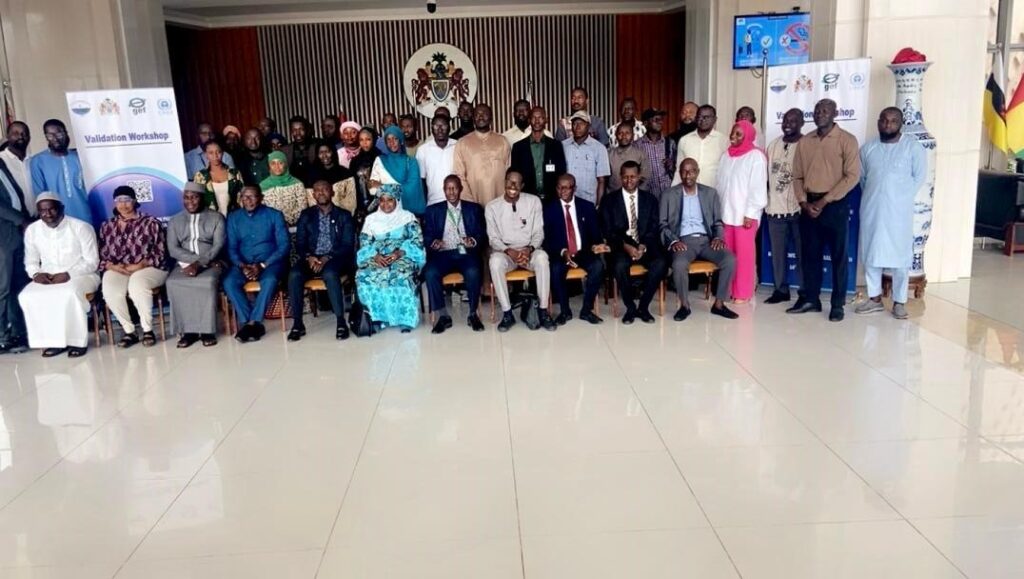
The validation workshop for the project took place on Monday at the Sir Dawda Conference Centre, bringing together key government officials, local authorities, civil society representatives, and international partners.
Dr. Dawda Badjie, Executive Director of the National Environment Agency (NEA), emphasized the project’s transformative potential, noting that Gambia would be the first African country to implement such a GEF-funded urban climate resilience initiative.
“This project is not just about infrastructure; it is about transforming the urban landscape to ensure our communities can withstand climate shocks,” Dr. Badjie said. He highlighted that poorly planned urbanization and extensive concretization in cities have contributed to flooding and heat stress, making sustainable urban planning critical for the country.
The project will focus on three core pillars: strengthening governance by embedding climate resilience into urban planning and infrastructure standards, promoting ecosystem-based adaptation through wetland and mangrove restoration, and empowering communities with knowledge and early warning systems to enhance climate preparedness.
Deputy Permanent Secretary Zaid Jallow and Minister of Environment, Climate Change and Natural Resources, Rohey John Manjang, underscored the urgency of the initiative. Scientific evidence shows that rising sea levels threaten nearly 60 percent of the population and economic assets in the Greater Banjul Area. Coastal erosion and saltwater intrusion have already disrupted agriculture and local rice production, posing significant food security risks.
“This project represents a covenant with future generations,” the Minister said. “By combining local expertise, international support, and community engagement, we aim to build a city that is inclusive, sustainable, and resilient to climate impacts.”
Also present was Bakary Singhateh, Executive Coordinator for the Kanifing Municipality, who welcomed the initiative and highlighted the importance of local governance in implementing climate-resilient measures
The CLIMB Project, developed in collaboration with UNEP and guided by extensive national consultations, is designed to serve as a model for other African cities. Stakeholders at Monday’s workshop validated the project document, setting the stage for its implementation and a stronger climate-resilient urban future for The Gambia.