


By: Fatou Dem
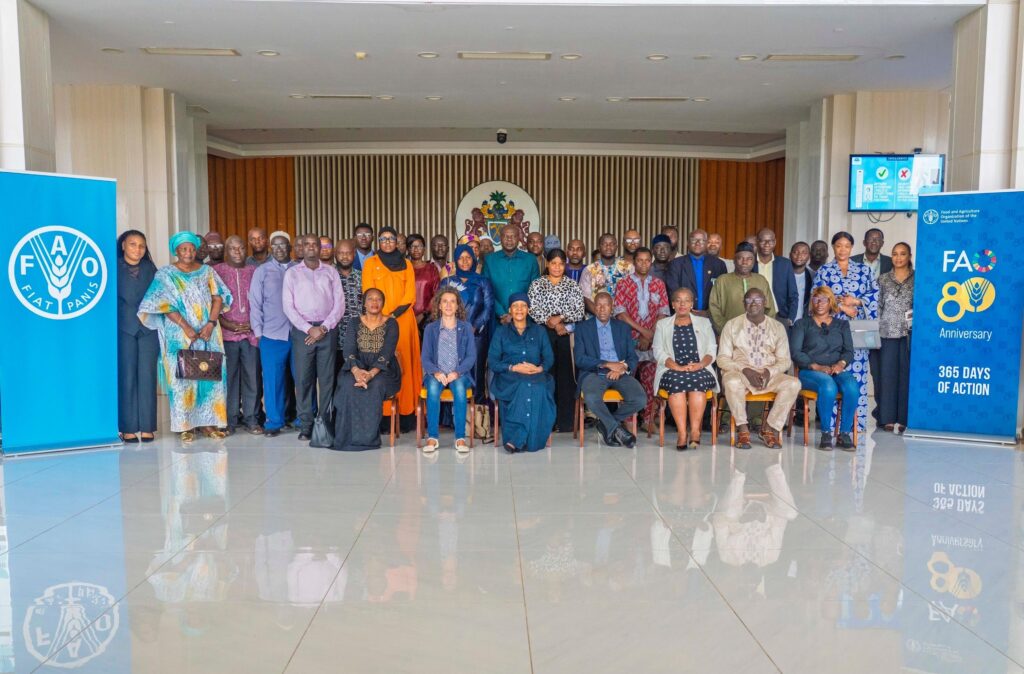
The Food and Agriculture Organization of the United Nations (FAO) recently held a three-day review and training session with government, civil society partners, and development agencies to reflect on progress, share results, and strengthen delivery.
“The Country Programming Framework (CPF, 2024–2028) is an FAO Roadmap for supporting the Gambia in line with FAO’s Strategic Framework (2022–2031) and the 2030 Agenda” said Ms. Moshibudi Rampedi, FAO Representative in The Gambia.
She emphasized that the CPF was developed through inclusive consultations and continues to reflect a commitment to the country’s shared development aspirations.
The CPF Review and Training Session served as a space for dialogue, learning, and mutual accountability for FAO and implementing partners. Concrete recommendations were tabled, best practices were exchanged, and consensus was built on how to enhance delivery going forward.
The session featured practical training for implementing partners on FAO’s Operational Partners Implementation Modality (OPIM), Procurement Rules, and Letters of Agreement (LoAs), aimed at equipping partners with the tools to navigate what many simply call “FAO procedures and improve delivery.”
Ms. Rampedi, while acknowledging the existing challenges faced from procurement delays to coordination gaps, added that the session is the space to raise pertinent issues, engage frankly, and offer mutual support.
Momodou Kanyi, the Principal Assistant Secretary at the Ministry of Environment, Climate Change and Natural Resources, described the review session as “a moment for collective reflection.” He lauded FAO’s long-standing partnership and support to national climate and forestry policy implementation and encouraged open discussion around implementation gaps and shared learning.
Also speaking along similar lines and adding a voice of appreciation to FAO and the United Nations, Babanding Kanyi, the Principal Assistant Secretary at the Ministry of Fisheries, Water Resources and National Assembly Matters, recognised FAO’s contribution in the fisheries sector. “FAO, through the FISH4ACP and PROREFISH Gambia projects support particularly in the oyster value chains and climate-resilient fisheries is highly commendable.”
Ms Paula Anton, the FAO Sub-Regional Fisheries and Aquaculture officer, reminded the partners about Gambia’s untapped fisheries and aquaculture resources. “You have very rich ecosystems and the youth, yet when one visits the restaurant, they hardly find fish; this is a demand we must meet.”
Ambassador Alhagie Nyangado, the Permanent Secretary of the Ministry of Agriculture, Livestock and Food Security, spoke from a place of both policy and personal FAO experience. He encouraged open dialogue during the session, reminding participants that the resources FAO mobilizes must be used efficiently and inclusively. “If you delay an activity that could help a poor child in a rural community, remember that child could be yours,” he said. “Let us remove bureaucracy where we can and serve the people who need us most.”
The CPF Review Session took on an added meaning to the historic celebration of FAO’s 80th Anniversary on 16 October 2025. For over four decades, FAO has stood with The Gambia, delivering support in many sectors.