


By: Nyima Sillah
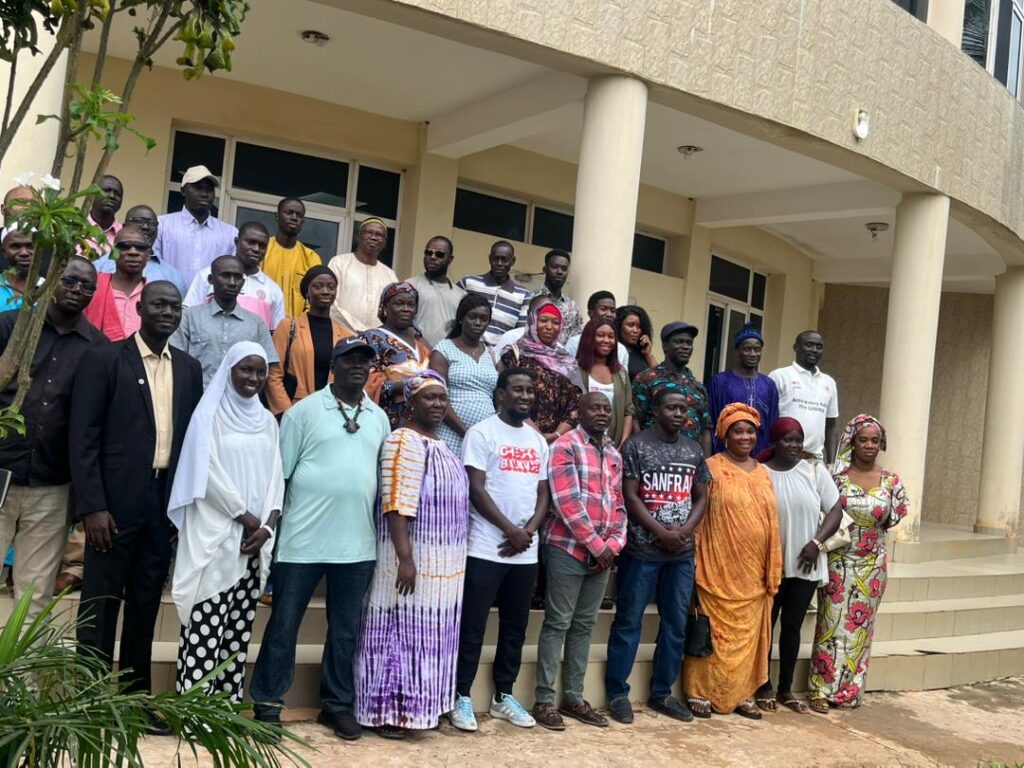
The West Africa Coastal Areas (WACA ResIP 2) Project, in partnership with the National Disaster Management Agency (NDMA), Thursday launched a two-day capacity building workshop for Ward Disaster Committees.
Participants were drawn from communities living along the flood-prone Kotu Stream and they were trained on disaster preparedness and response held in NANA hall.
The training aims to help communities operationalize contingency plans developed last year for nine wards covering parts of the Kanifing Municipality and the West Coast Region.
Delivering remarks on behalf of the NDMA Executive Director, Bubacarr Fofana described the training as a crucial milestone for disaster preparedness. “Having a contingency plan is vital, but its true value lies in effective operationalization,” he noted.
According to him, in 2024, over 800 houses in Kanifing Municipality and the West Coast Region were affected by flash floods and domestic fires, which increased community vulnerability. “This situation is largely due to inadequate drainage infrastructure, poor settlement planning, and individual attitudes,” he stated.
Fofana urged participants to take the training seriously, highlighting its alignment with the National Disaster Risk Management Policy 2024–2033 and the Sendai Framework for Disaster Risk Reduction 2015–2030. “I encourage all of you to engage fully not just for your personal growth but for the collective benefit of the communities you represent and the nation as a whole,” he added, while thanking the WACA Project and the Office of the Vice President for their support.
Welcoming participants, Ngang Jeng, Disaster Coordinator for Kanifing Municipality at NDMA, stressed the urgency of putting the contingency plans into practice. “It would be pointless to let them gather dust, especially now that we are in the rainy season,” he said.
Referring to the latest forecast by the Department of Water Resources, Jeng warned of a 45% chance of above-normal rainfall this year. “It is better for us to prepare for the worst,” he cautioned.
Mr. Mohamed Leroy Gomez, speaking for the WACA Project, emphasized that flooding remains among The Gambia’s most significant hazards. “This training is meant to further build your capacity so that you can operationalize the disaster contingency plan at ward level,” he explained. Gomez encouraged participants to share what they learn with other community members who could not attend, highlighting that 13 representatives were invited per ward.
Madam Isatou Camara on behalf of the participants urge all participants to take the training seriously, in ensuring that they respond effectively to disasters in their communities.