


By: Sering Mass Jallow
The National Human Rights Commission (NHRC) Monday opened a two-day training aimed at equipping key institutions in The Gambia with the tools to ensure persons with disabilities are fully included in risk and disaster management policies and interventions.
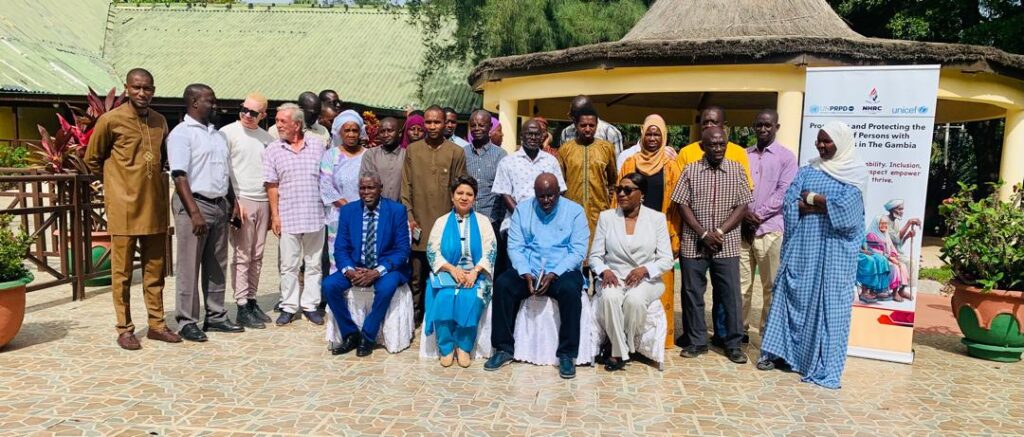
Held at the Senegambia Beach Hotel from June 30 to July 1, the capacity-building session is part of the United Nations Partnership on the Rights of Persons with Disabilities (UNPRPD) programme, jointly implemented by UNICEF and UNFPA in The Gambia.
Senior government officials, development partners and representatives of disability organizations gathered to discuss practical ways to mainstream disability inclusion into disaster planning as the country faces rising climate threats, particularly flooding.
Delivering the opening remarks on behalf of the NHRC, Vice Chairperson Jainaba Jome stressed that disaster preparedness and response must be fair and rooted in human rights. “This training comes at a critical time when the frequency and severity of disasters continue to challenge our communities, especially the most vulnerable persons with disabilities,” she said.
Speaking for UNICEF Country Representative, Nafisa Sadiq says the training represents a concrete step towards equipping stakeholders with the knowledge and solidarity to make disaster risk reduction not only inclusive but just and empowering. She reaffirmed UNICEF’s commitment to advancing disability-inclusive development in The Gambia.
Executive Director of the National Disaster Management Agency (NDMA), Sanna Dahaba, emphasized the disproportionate impact of disasters on persons with disabilities. “Disasters do not discriminate but their impacts do,” he said. “This calls for urgent and sustained actions to make our preparedness and response mechanisms truly inclusive.”
Despite facing higher risks from climate change impacts like flooding, persons with disabilities in The Gambia have long been left out of mainstream disaster risk management strategies. With the country now drafting its National Disaster Risk Management Policy for 2024–2033, advocates say this is the time to institutionalize disability-inclusive frameworks to ensure no one is left behind in emergencies.
The training is expected to strengthen the capacity of the NDMA and other stakeholders to deliver on that promise.