


By: Fatou Krubally
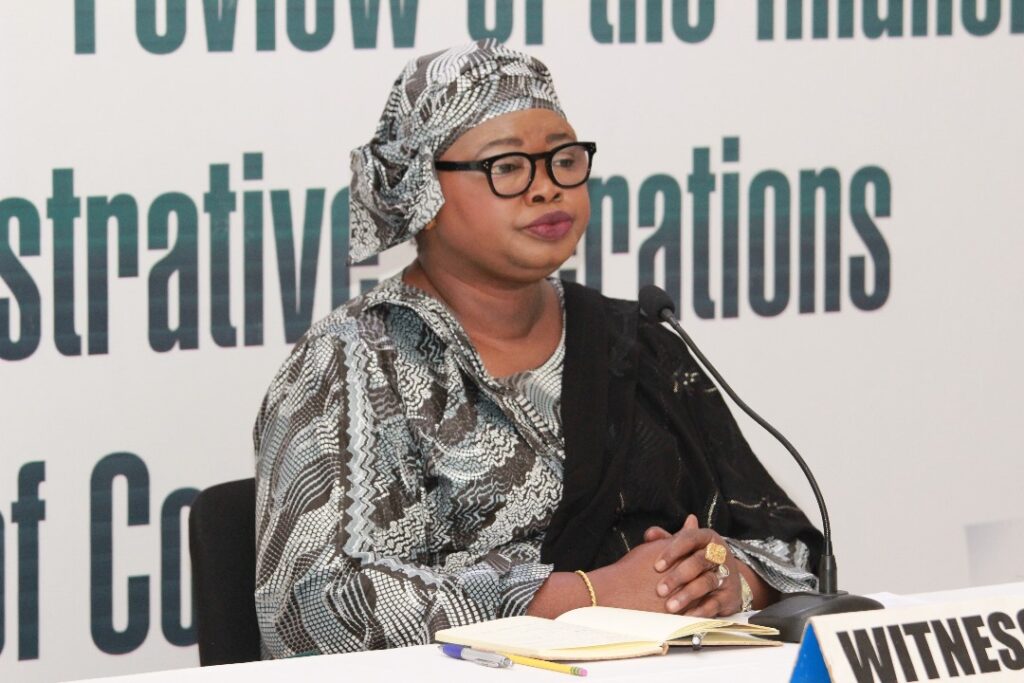
Mayor Rohey Malick Lowe has admitted that the Banjul City Council (BCC) operated without a formal expenditure ceiling during her tenure, describing the council’s internal systems as weak and “polluted.”
She made the admission while testifying before the Local Government Commission of Inquiry on Wednesday.
Under questioning from Lead Counsel Patrick Gomez, Mayor Lowe acknowledged that neither she nor the council had set spending thresholds for the Chief Executive Officer (CEO), as required by financial regulations. “There was nothing like a ceiling. If the CEO is to spend more than D500,000, he needs to inform the council. But I cannot remember any time such a decision was taken,” she said.
Gomez cited Sections 305 and 306 of the Financial Manual, which mandate councils to pass resolutions defining monetary limits for both the CEO and mayor. “If the council did not pass that resolution, it’s either that they didn’t know or they knew and failed to act,” Gomez said. “Either way, it is deliberate.”
In response, Mayor Lowe said she had written memos “more than twice” to the CEO on the issue, but they went unanswered. “As a leader, I take responsibility,” she told the commission.
She also described frustration over communication gaps between the ministry and the council. “You write to the ministry and they tell you: ‘Don’t ever write to us, only the CEO can.’ That’s the frustration we face,” she said.
Gomez emphasized that legally, the council is the highest authority, followed by the mayor, with the CEO reporting to both. “The CEO does not have full or absolute power to decide how much money goes in or out,” he said.
The mayor agreed, stating: “We rely entirely on the CEO to brief us and advise us on council accounts. If he doesn’t want you to know something, you won’t know it.”
She also revealed that for over eight years, BCC rarely approved individual expenditures above D500,000, except in special cases such as the EU-funded project.
Lowe called for systemic reforms. “Unless we all change, the council system will never improve,” she said. The inquiry continues to hear from witnesses as it examines financial management across local government councils.